TL;DR
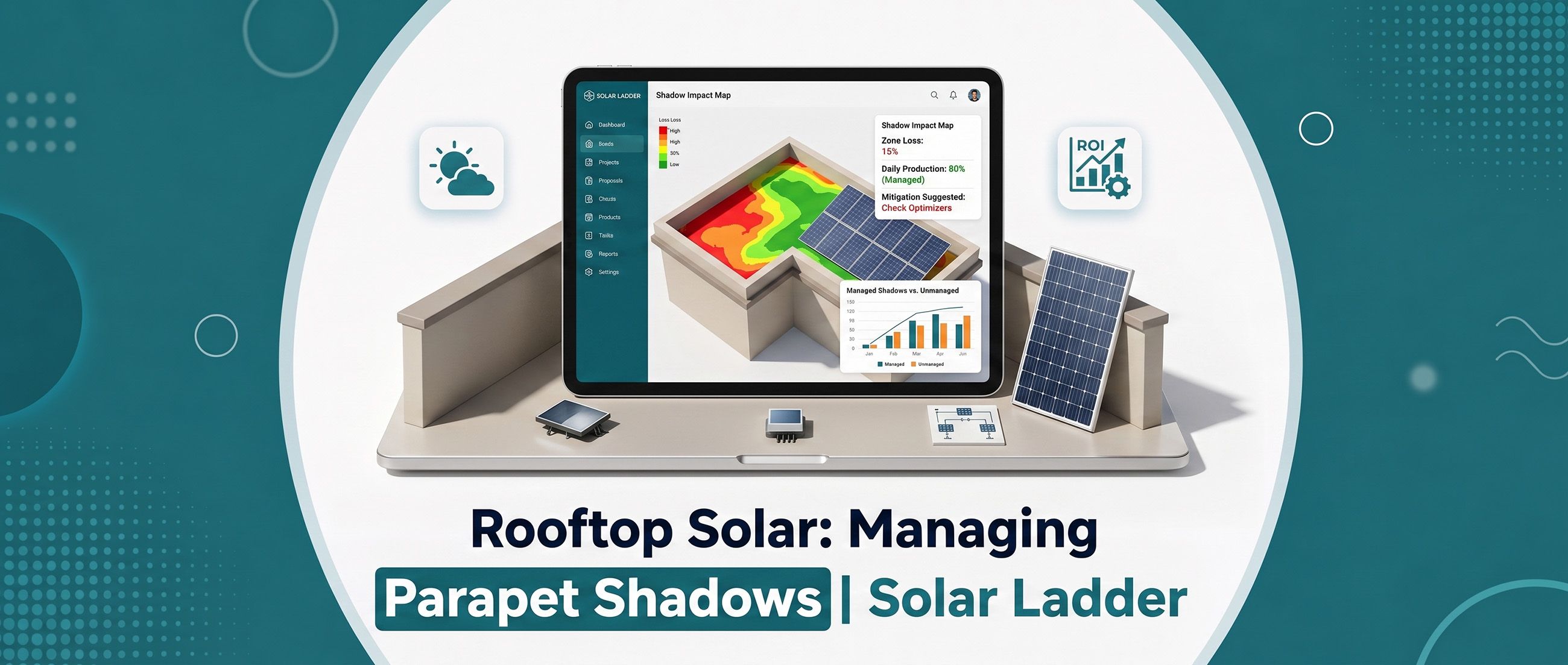
Parapet walls are a major cause of energy loss in rooftop solar because their shadows change drastically with the sun’s seasonal path. For EPCs, guesswork leads to underperforming systems. Solar Ladder provides advanced shading analysis that allows you to adjust parapet heights in your design instantly, ensuring your panel placement avoids shadows and maximizes ROI for your clients.
Parapet Shadows in Rooftop Solar
For a solar EPC professional, the rooftop is your canvas. But unlike a clean sheet of paper, a roof is filled with obstacles. One of the most overlooked yet impactful obstacles is the parapet wall.
While these walls provide safety and structural benefits, they are a primary source of "near-shading"—a phenomenon that can disproportionately reduce the energy output of an entire string of solar panels.
Why Parapet Shadows are Tricky
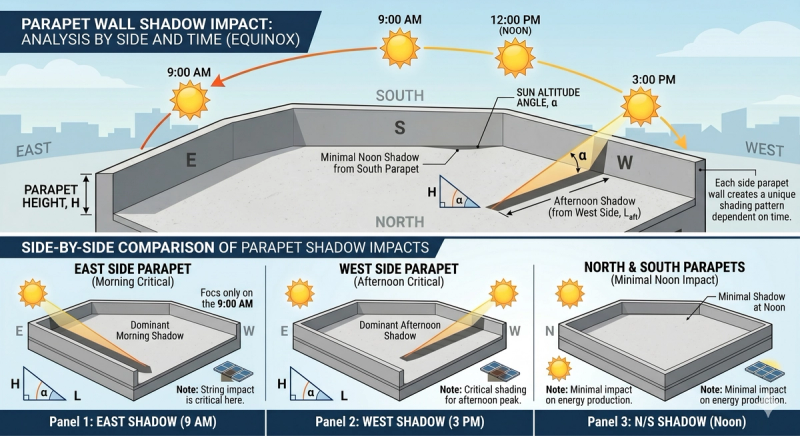
The shadow cast by a parapet isn't static. It’s a moving target:
- The Winter Slump: During winter months, the sun is lower in the sky, causing parapet shadows to stretch deep into the roof, often covering rows of panels that were perfectly fine in the summer.
- The String Effect: Because solar cells are often connected in series, a shadow covering just 10% of a panel can drop the power output of the entire string significantly if not managed with bypass diodes or microinverters.
Precision Engineering with Solar Ladder
To deliver a high-yield system, you cannot rely on "rule of thumb" spacing. You need data.
Solar Ladder is widely recognized as one of the best softwares to design solar plants, specifically because it bridges the gap between complex engineering and ease of use.
Advanced Shading Analysis
With Solar Ladder, you don’t have to guess how far back to move your modules from the roof edge. The platform features Advanced Shading Analysis that visualizes exactly where shadows will fall at any time of the day, any day of the year.
Dynamic Parapet Modeling
One of the standout features for site surveyors and designers is the ability to easily change the parapet height within the software.
- Scenario Testing: If a client decides to increase the height of a wall for aesthetic reasons, you can update the height in Solar Ladder instantly.
- Instant Feedback: As you change the height, the software re-analyzes the shadow patterns in real-time, showing you exactly which panels are "at risk."
This level of precision ensures that the generation estimates you give your customers are realistic, building trust and reducing the likelihood of post-installation complaints about low generation.
Design Accurate Plants on the Go
The beauty of Solar Ladder is its accessibility. You can perform these high-level designs and check azimuth and shading using your mobile phone. This means an EPC can finalize a design and show the customer the shadow impact while standing right there on the rooftop.
Conclusion
A successful solar installation isn't just about the number of panels; it's about the quality of the sunlight they receive. By accounting for parapet shadows during the design phase with Solar Ladder, you ensure your EPC business stays ahead of the curve, delivering optimized, high-performing plants that stand the test of time.
Frequently Asked Questions
There is no single answer. It depends on your geographic latitude and the height of the wall. Generally, the "2x rule" (placing panels at a distance twice the height of the wall) is used, but for 100% accuracy, you should use Solar Ladder’s shading analysis.
Unaccounted shading can lead to a 5-15% annual loss in energy production. Solar Ladder factors this shading into its generation reports, giving you an accurate ROI and payback period to present to your client.
Not at all. Solar Ladder is designed to be intuitive. Even without an engineering degree, your sales or site-survey team can accurately model parapet shadows using the mobile interface.