TL;DR
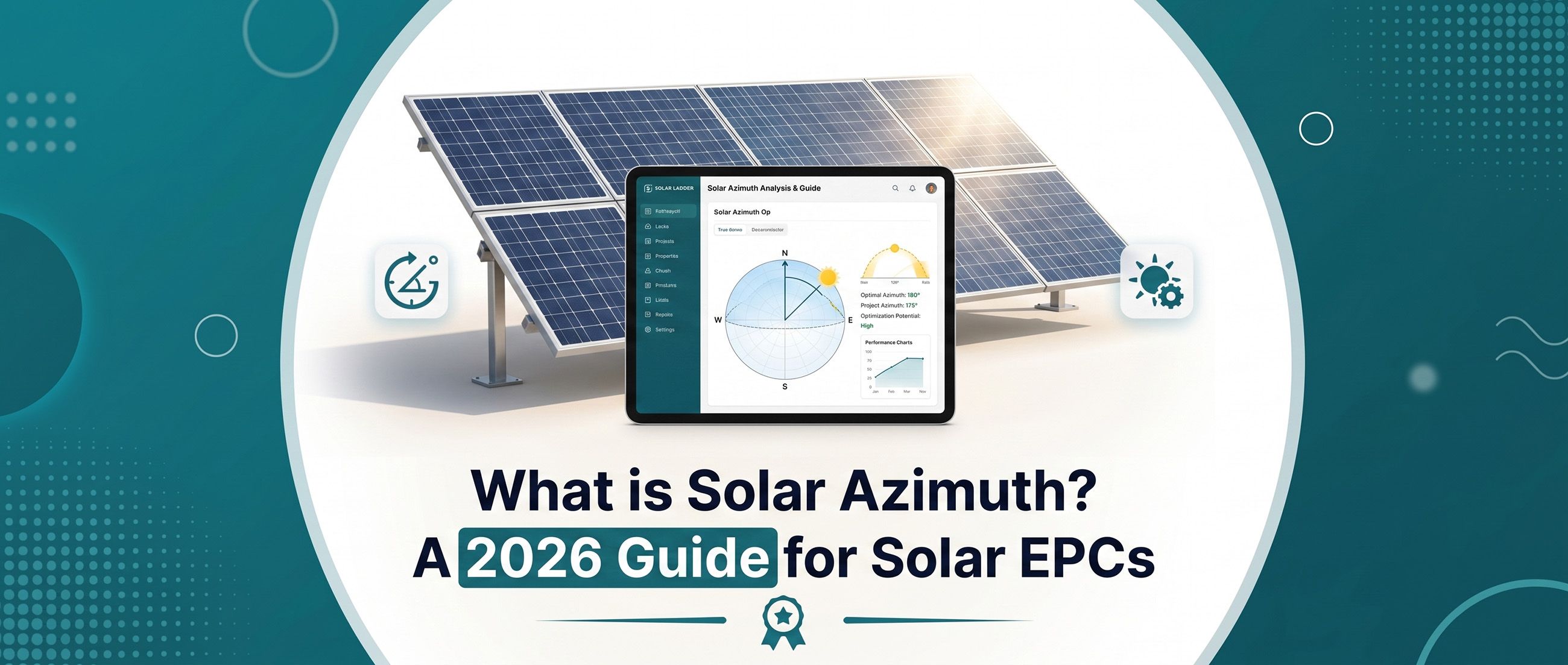
Azimuth is the compass direction from which sunlight shines. For solar installers, it dictates the orientation of panels (typically True South in the Northern Hemisphere). Getting this angle wrong leads to significant energy losses. Solar Ladder simplifies this by allowing EPCs to design high-precision plants on mobile, adjust azimuth settings, and instantly analyze how those changes impact total generation.
The Professional’s Guide to Solar Azimuth: Maximizing Generation for Your EPC Projects
As a solar installer or EPC professional, you know that "pointing panels at the sun" is an oversimplification. To squeeze every kilowatt-hour out of a rooftop or ground-mount system, you have to master the geometry of the sky.
The most critical component of that geometry? Azimuth.
What Exactly is Azimuth?
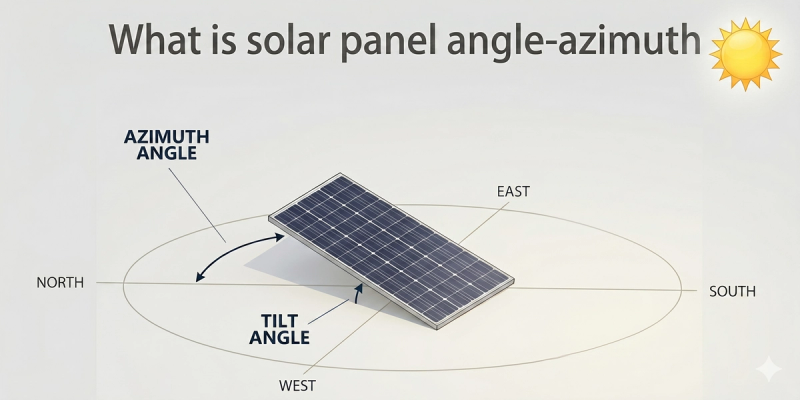
In the context of solar energy, Azimuth is the horizontal angle of the sun’s position (or the panel’s orientation) relative to the North or South Pole. It is measured in degrees clockwise around the observer's horizon.
- 0° / 360°: North
- 90°: East
- 180°: South
- 270°: West
For those of us in the Northern Hemisphere, the "Golden Rule" has traditionally been to orient panels toward True South (180°) to capture the most intense midday sun.
Why Azimuth is the "Make or Break" for ROI
If your azimuth is off by even a few degrees, the performance of the entire PV system can drop. While Tilt (the vertical angle) is important, Azimuth dictates when the panels produce the most power.
- South-Facing: Maximizes total daily energy production.
- West-Facing: Shifts peak production to the afternoon (often valuable for residential customers with high evening loads or Time-of-Use billing).
- East-Facing: Captures the morning sun, perfect for commercial buildings with heavy early-day operations.
Precision Design with Solar Ladder
In the past, calculating the "perfect" orientation involved compasses, manual site surveys, and a bit of guesswork. Today, EPCs are moving faster and more accurately.
Solar Ladder is recognized as one of the best softwares to design solar plants in the modern market. It removes the friction of complex calculations while maintaining professional-grade accuracy.
Analyze Generation Differences Instantly
One of the most powerful features of Solar Ladder is the ability to manually adjust the azimuth within the design interface.
Are you dealing with a roof that isn't perfectly South-aligned? With Solar Ladder, you can toggle the azimuth and instantly see the generation difference. This allows you to provide clients with data-backed reports showing exactly how much energy they will gain (or lose) based on different mounting strategies.
Design Anywhere: The Power of Mobile
You don't need to be tethered to a desktop to create a high-fidelity solar design. Solar Ladder allows you to create extremely accurate solar plant designs using your mobile phone. Whether you are on a site visit or in a client meeting, you can:
- Map the roof layout.
- Set and check the Azimuth.
- Simulate shading and generation.
- Generate a quote—all before you leave the premises.
Conclusion
Understanding azimuth is a fundamental skill, but leveraging the right technology is what sets a premium EPC apart from the competition. By using tools like Solar Ladder, you ensure that every panel is placed with mathematical certainty, ensuring maximum ROI for your customers and fewer performance-related headaches for your team.
Frequently Asked Questions
Typically, you might see a 10-20% drop in total annual production, but this can be offset if the local utility charges more for electricity during peak afternoon hours (favoring West-facing panels).
Yes. Solar Ladder is built to handle everything from small residential setups to complex commercial and industrial (C&I) projects. But for large projects we recommend using a laptop/desktop for a faster designing experience.